In 2026, the United States is scheduled to begin issuing the next family of redesigned banknotes, with the $10 note targeted for issuance at the end of the year. That being said, Q3 of 2026 they have released information pointing to a release date sometime in 2027. While consumers will eventually notice changes to the notes themselves, businesses that handle cash should pay closer attention to what is happening behind the scenes. The redesign is being developed not only around security and counterfeit deterrence, but also around how the new notes will function in commerce and interact with banknote-processing equipment. According to the Bureau of Engraving and Printing (BEP), the redesign process includes security development, production considerations, and machine readiness.
U.S. Currency Redesign: Key Points OverviewThe next family of U.S. banknotes is expected to begin with the $10 note in 2027, followed by additional denominations through the 2030s. The redesign emphasizes stronger security, counterfeit deterrence, accessibility, and machine readiness. Businesses should monitor equipment compatibility, manufacturer guidance, and potential upgrade requirements while continuing to use existing notes. Financial institutions can prepare by reviewing equipment support, assessing aging systems, and budgeting strategically without replacing compatible machines prematurely. |
This Is More Than a Visual Update
Currency redesigns in the United States are rare and involve years of research, development, testing, and coordination across the U.S. Currency Program. The process involves agencies and organizations responsible for currency development, production, issuance, security, and machine readiness. According to the Bureau of Engraving and Printing (BEP), security is the primary purpose of the redesign, with new security features developed to address increasingly sophisticated counterfeiting threats.
Why Machine Readiness Matters
The new family is being designed to be secure, manufacturable, and functional in commerce. That means the changes extend beyond the appearance of the notes to the security features that people and banknote-processing equipment use to authenticate them. BEP notes that machine readiness is a critical part of the rollout, with samples of redesigned notes provided to banknote-equipment manufacturers and the Federal Reserve’s Currency Technology Office so they can prepare cash-handling machines for the new designs.
Accessibility Is Also Part of the Redesign
Accessibility is another consideration in the next-generation currency effort. According to the Bureau of Engraving and Printing (BEP) accessibility status report, the raised tactile feature has been integrated into the next $10 note, helping blind and visually impaired individuals distinguish Federal Reserve notes by denomination.
Why This Matters to Businesses
Most business owners don’t think about currency design until something stops working.
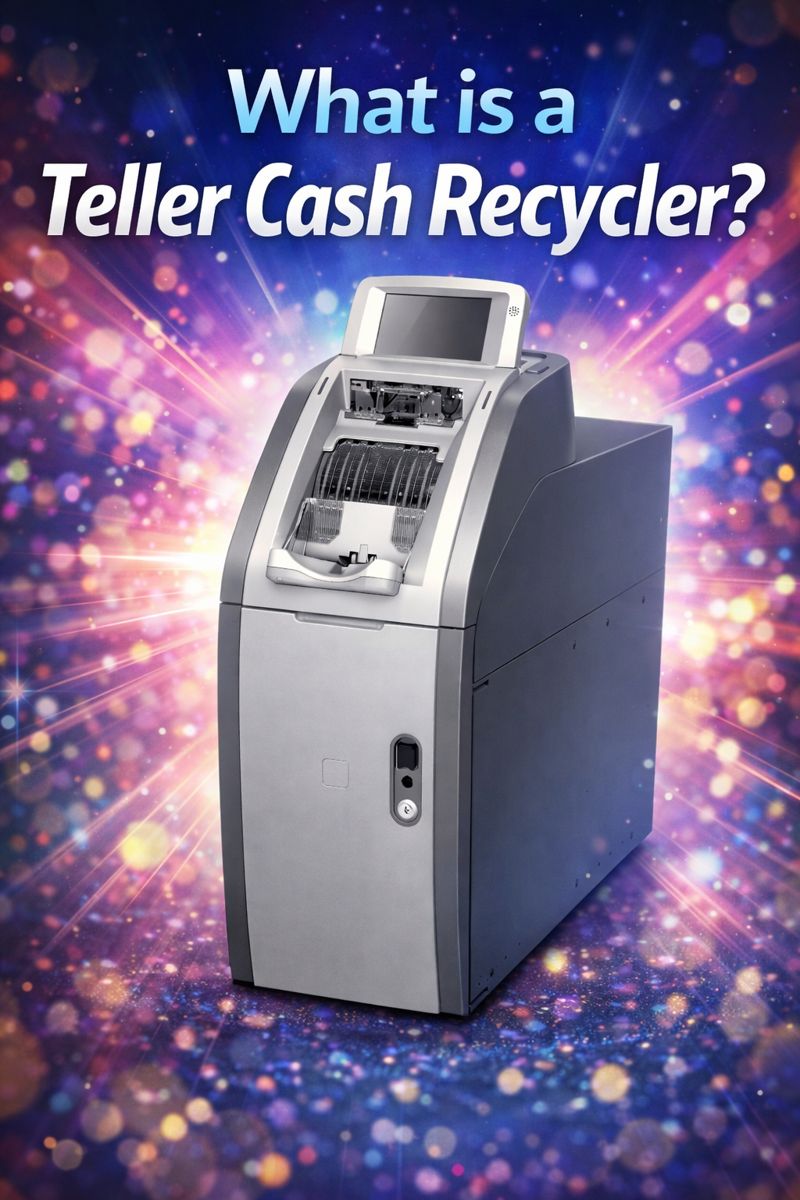
When redesigned notes enter circulation, cash-handling equipment such as bill validators, Teller Cash Recyclers, and accepting ATMs will need to be compatible with the new designs. The exact requirements will depend on each equipment model and manufacturer testing, making compatibility updates important to monitor.
This is especially relevant for:
- Retail environments that rely heavily on cash
- Financial institutions using automated cash-handling equipment
- Businesses using bill validators in kiosks or self-service equipment
The gradual rollout gives businesses time to prepare, review equipment support, and respond to manufacturer guidance.
The Release Schedule
According to the U.S. Currency Education Program’s information on Federal Reserve note redesigns, the current denomination sequence and planned issuance dates are:
2027 – $10
2028 – $50
2030 – $20
2032–2035 – $5
2034–2038 – $100
The current next-family redesign does not include the $1 or $2 denominations. All U.S. currency remains legal tender regardless of when it was issued, according to the U.S. Currency Education Program.
What We Know and What We Don’t Know
More information about the upcoming currency redesign is now available than when this article was originally published. The Bureau of Engraving and Printing (BEP) confirms that security is the primary purpose of the redesign, with the next family being developed to address evolving counterfeiting threats while remaining functional in commerce. The first redesigned denomination is the $10 note, targeted for issuance in 2027.
What We Know About Machine Readiness
Machine compatibility is an established part of the redesign process. BEP provides samples of redesigned notes to banknote-equipment manufacturers and the Federal Reserve’s Currency Technology Office so they can prepare cash-handling equipment for the new designs. This makes Teller Cash Recyclers, bill validators, currency discriminators, and ATMs that accept or recycle notes particularly important to monitor as manufacturers complete their testing and provide compatibility guidance. As of August 2026- manufacturers still to not have a test deck to test machines/ software.
What We Still Don’t Know
The exact technical requirements for individual equipment models have not yet been established publicly. Businesses should not assume that every machine will require the same software update, firmware change, hardware modification, or replacement. Compatibility will depend on the equipment, its authentication technology, and the manufacturer’s testing and support process.
Until manufacturers complete testing and communicate model-specific requirements, claims about exact upgrade costs or hardware changes remain speculative. Institutions should therefore monitor manufacturer guidance rather than replacing equipment solely because of the upcoming redesign.
Planning Is a Smart Move
Financial institutions do not need to replace equipment simply because redesigned currency is coming, but they should begin evaluating their cash-handling equipment now. Banks and credit unions operating Teller Cash Recyclers, currency discriminators, bill validators, or deposit-enabled and recycling ATMs can use this time to review equipment support, model age, and potential compatibility requirements.
Review Your Existing Equipment
Start by creating an inventory of equipment that scans, authenticates, accepts, or recycles banknotes. Identify which machines are still supported by their manufacturers and which older models may have limited upgrade options. This can help institutions prioritize equipment that may need closer attention as compatibility testing progresses.
Monitor Manufacturer Guidance
The BEP’s Banknote Equipment Manufacturers guidance explains that its Test Deck Program provides approved equipment manufacturers with non-monetized Federal Reserve note samples to test upcoming currency changes. Institutions should therefore monitor their equipment manufacturers for testing results, compatibility announcements, software or firmware updates, and any model-specific recommendations rather than relying on assumptions about what will need to change.
Budget Without Replacing Too Early
Preparing a budget for potential compatibility work is different from committing to immediate replacement. Institutions can plan for possible software or firmware updates and identify aging equipment that may warrant replacement if manufacturers determine that an upgrade is not practical. Taking these steps early can give banks and credit unions more flexibility as the first redesigned notes approach circulation.
Explore Cash Solutions
Bring Smarter Cash Control to Your Branch
Automated cash handling designed for today’s banks and credit unions. Talk to an expert.
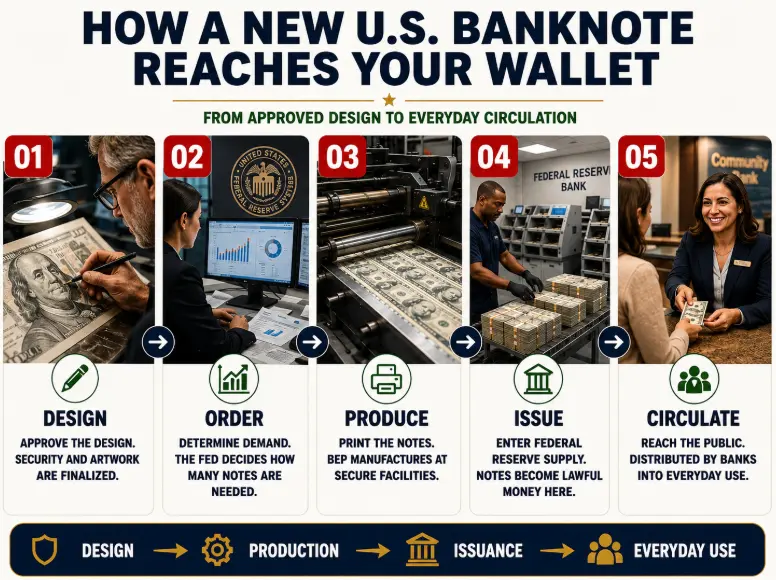
How a New Banknote Moves Into Circulation
A redesigned U.S. banknote goes through several stages before reaching businesses and consumers. The process begins with design and demand planning, followed by specialized production and Federal Reserve issuance. Banks and credit unions then distribute the notes into everyday commerce. Understanding this journey provides useful context for how redesigned currency moves from development to circulation across the U.S. financial system.
Plan With the Right Cash-Handling Partner
As redesigned U.S. currency approaches, choosing the right cash-handling partner can make the transition easier. At Best Products Sales & Service, we combine practical industry knowledge with solutions designed for banks and credit unions, helping institutions evaluate Teller Cash Recyclers, improve cash control, and confidently plan for changing currency requirements across branches without unnecessary complexity or disruption.
|
|
Frequently Asked Questions About the 2026 U.S. Currency Redesign
Are the redesigned U.S. banknotes expected to change size?
Official information has not yet confirmed whether redesigned notes will have different dimensions. Final specifications will be announced as each denomination approaches production.
Will the redesigned U.S. bills have different colors?
Redesigned notes are expected to use denomination-specific visual elements, including color and high-contrast features, but final color schemes have not yet been announced.
Will the redesigned U.S. bills feature different portraits?
Final portrait details have not been fully announced. Current BEP information identifies existing portrait subjects, while future design details will be released closer to issuance.
Can businesses refuse to accept older U.S. bills?
Federal policy recognizes older Federal Reserve notes as legal tender, although private businesses generally may establish their own cash-acceptance policies, subject to applicable state or local requirements.
How can cashiers verify whether a redesigned bill is genuine?
Cash handlers should use the official authentication features and training resources provided for each denomination rather than relying solely on color, appearance, or automated detection equipment.
Start Your ATM Business
Ready to Get Started?
If you’re evaluating Teller Cash Recyclers and want practical guidance instead of sales jargon, you’re in the right place.
We’ll help you understand:
- How Teller Cash Recyclers work in real branch environments
- Where they fit within your teller line or branch layout
- What operational benefits to expect day-to-day
- How they improve accuracy, security, and cash control
- And how to choose the right configuration for your institution
Contact Us when you are ready to get started!
Whenever you’re ready, we’re only a call or message away.
Follow Us on Social
Peter Wilkenshoff
Peter Wilkenshoff is the President of Best Products Sales and Service Inc./ BestATMstore.com. With more than 20 years in the payments industry, he has made a career out of helping businesses get paid in the simplest and smartest ways possible. Cash, cards, mobile wallets or whatever futuristic payment gadget someone invents next week, he is here for it. He loves taking the stress out of money movement and turning complex processes into something anyone can understand. When he is not working he is usually fishing, building something around the house, out on a boat, surfing or planning the next family Disneyworld trip which sounds like a strange mix until you meet him and suddenly it all adds up.
Follow Peter on LinkedIn: https://www.linkedin.com/in/peter-wilkenshoff/
Join our Newsletter