ATM Machine Price in 2026: How Much Does an ATM Cost?
If you’re looking for the price of an ATM machine, the good news is that buying an ATM is probably less expensive than you think. Most new retail ATM machines in 2026 cost approximately $2,300 to $4,000, with many of the most popular models selling for around $2500.
However, the actual ATM price depends on the machine, cash capacity, features, manufacturer and, perhaps most importantly, the company you purchase it from. Two identical ATMs can have similar upfront prices but dramatically different long-term costs if one requires expensive processing, wireless service or a long-term contract.
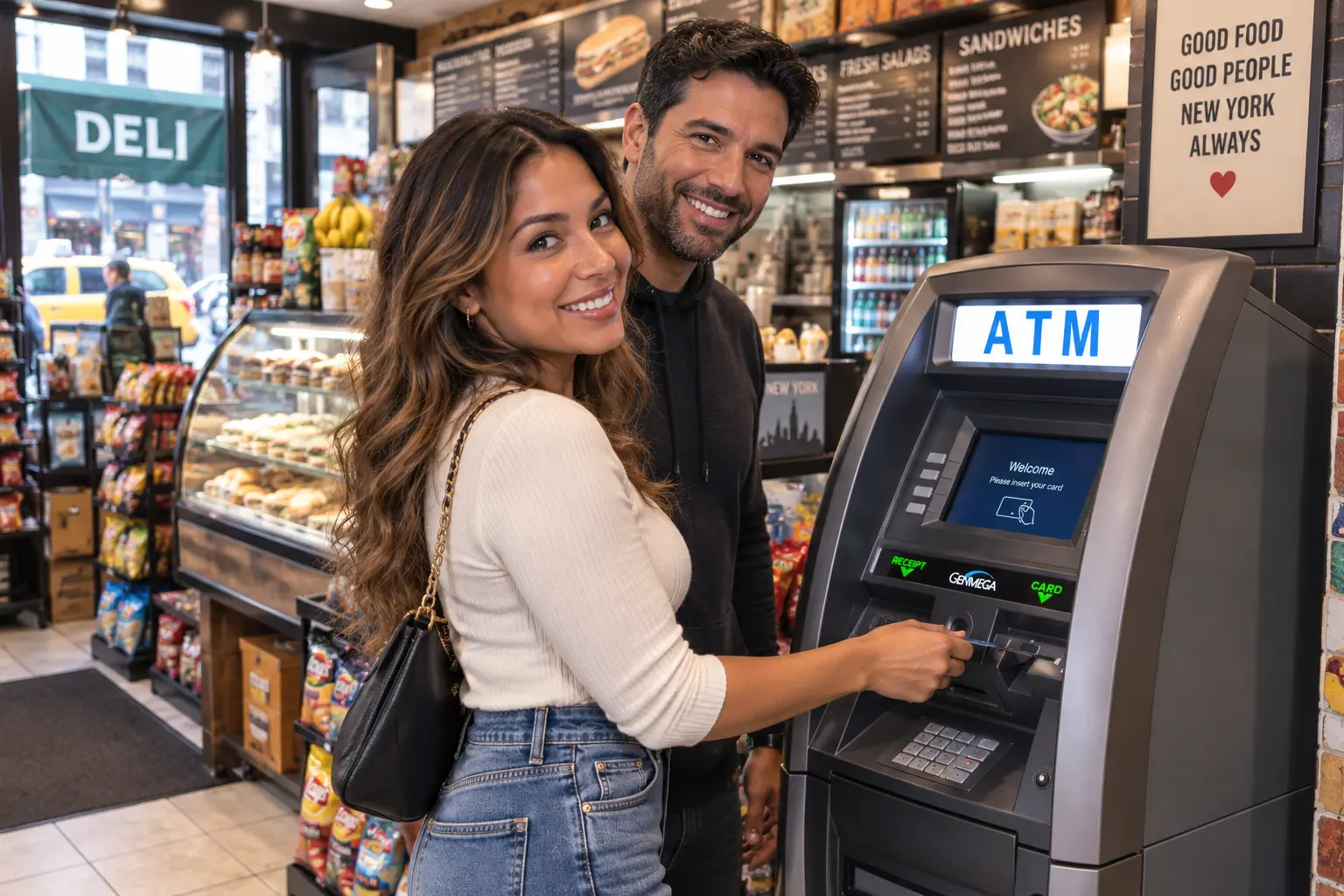
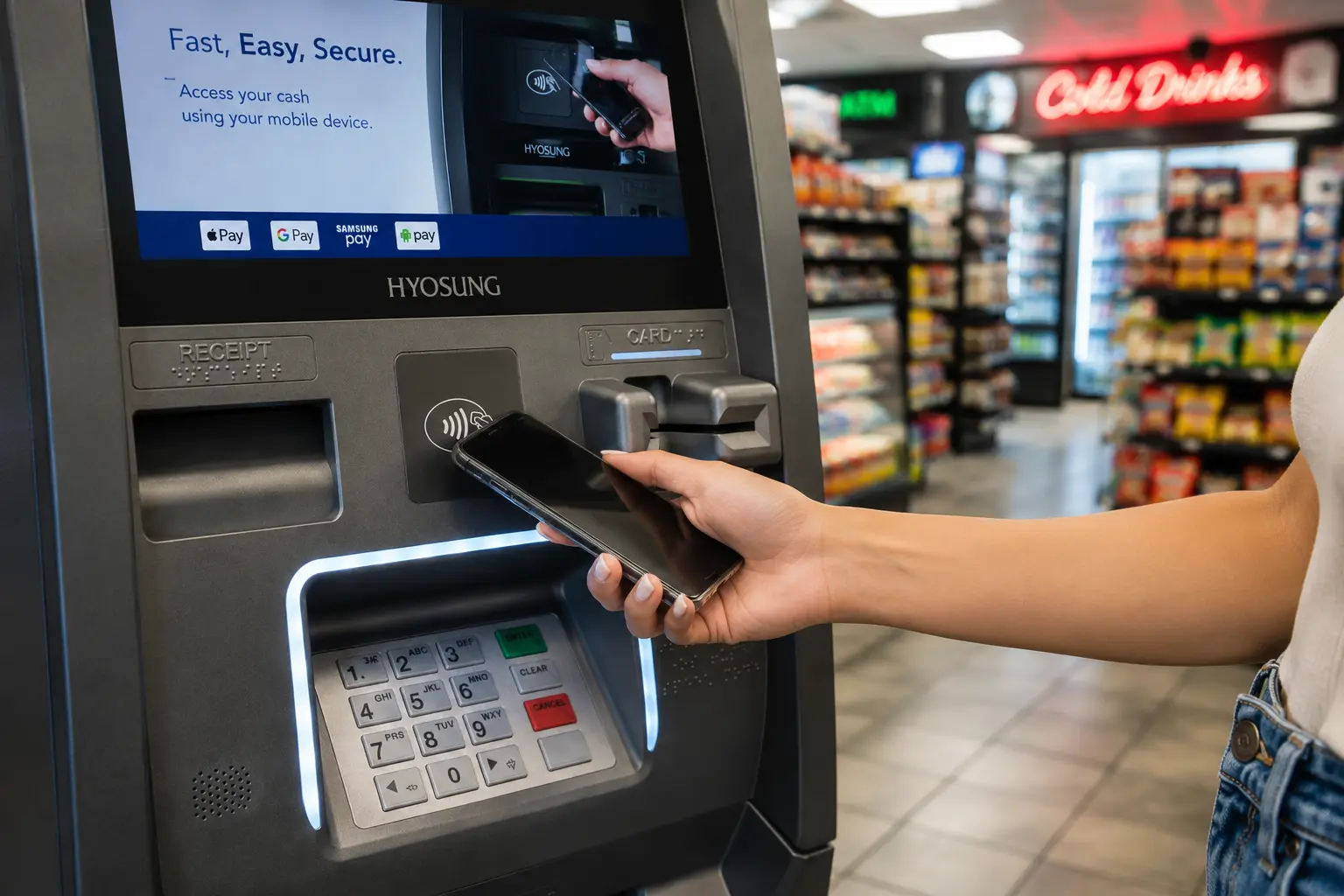
For most convenience stores, bars, restaurants, hotels and other retail businesses, you do not need an expensive bank-style ATM. A reliable retail ATM from a major manufacturer such as Genmega or Hyosung will typically fall somewhere in the mid-$2,000 to low-$3,000 range.
So, how much should you actually expect to spend? Let’s take a closer look at ATM machine prices in 2026 and what you should know before buying one.
How Much Does an ATM Machine Cost?
A new retail ATM machine generally costs between $2,300 and $4,000 in 2026. Entry-level machines typically cost around $2,300 to $2,700, while ATMs with larger touchscreens, higher cash capacities or more advanced features can cost $3,000 to $4,000 or more.
For the average small business owner, however, spending $4,000 on an ATM usually isn’t necessary.
Some of the most popular ATMs in the United States—include the Genmega G2500, Genmega Onyx and Hyosung Halo II—are available for well under $3,000 in standard configurations.
Multiple cassettes, higher cassette capacity and through-the-wall ATMs are more expensive. ATMs designed for banks and credit unions are in an entirely different category and can easily cost tens of thousands of dollars depending on their deposit, recycling and security capabilities.
The important thing is to compare the right type of ATM for your business rather than simply searching for the cheapest ATM price you can find.
Current ATM Machine Prices for 2026
Here are examples of current prices for several popular retail ATM machines:
ATM Machine Starting Pricing
Genmega G2500 – $2,380
Genmega Onyx – $2,640
Genmega Onyx W – $2,850
Hyosung Halo II – $2,345
Hyosung Force – $2,555
Prices can change based on configuration, manufacturer price changes, options and promotions, so buyers should always verify current pricing before ordering.
The biggest takeaway is that a business owner looking for a quality new ATM should generally expect to spend around $2,400 to $3,000 for a standard retail machine.
You don’t necessarily need to spend more to get a reliable ATM.
Why Do ATM Prices Vary So Much?
If you’ve already started shopping for an ATM, you’ve probably noticed significant differences in advertised prices.
One website may advertise an ATM for $2,300 while another company appears to sell a similar machine for $2,600. That makes it tempting to assume the $2,300 machine is automatically the better deal.
It isn’t always.
The ATM hardware is only one part of the transaction. Processing agreements, monthly fees, wireless charges, surcharge splits, warranties, shipping and service can have a much greater impact on what your ATM ultimately costs.
For example, saving $200 on the initial ATM purchase isn’t much of a bargain if you’re required to pay an additional $50 or $100 every month for the next five years. There is one company “who we will not mention” who sells ATMs as low as $1,600 – however the catch is you have to sign a 5 year processing agreement, you have to pay a percentage of surcharge to them and you have to enroll in 2 of the 3 of the following programs: 1. A surcharge free program, 2. Utilize their wireless from them for $50 a month, 3. Sign up for a service plan that costs $30-$40 per month. So what seems like a great deal and gets you to call them in reality is a horrible deal.
That’s why we recommend comparing the total cost of owning an ATM, not simply the advertised ATM price.
Does a More Expensive ATM Make More Money?
Usually, no.
This is one of the most important things for a first-time ATM buyer to understand.
A customer withdrawing $100 doesn’t particularly care whether the ATM costs $2,500 or $4,000. Assuming both machines are reliable and easy to use, they perform essentially the same job.
An ATM’s profitability is driven much more by location and transaction volume than by the price of the machine.
A $2,500 ATM performing 200 transactions per month can be far more profitable than a $4,000 ATM performing 40 transactions per month.
More expensive machines may offer larger screens, increased cash capacity, multiple cassettes, improved appearance or other useful features. Those upgrades can make sense in busy locations or environments where appearance matters.
But don’t assume that spending more automatically means earning more. But if you have a small barber shop, nail salon, and you are just doing this for convenience- buy the least expensive machine.
What Is the Cheapest New ATM Machine?
Entry-level retail ATM machines generally start in the low-to-mid $2,000 range.
Machines such as the Genmega G2500 and Hyosung Halo II are examples of affordable retail ATMs designed for everyday locations.
These aren’t necessarily “cheap” machines in terms of quality. They are simply designed to do a relatively straightforward job: securely dispense cash.
For a convenience store, bar, restaurant, liquor store, hotel, salon, laundromat or similar business, a Tier 1 or entry-level ATM may be all you need.
Paying for features your location doesn’t need will only extend the amount of time it takes to recover your investment.
How Much Does a Used ATM Cost?
A used ATM can cost considerably less than a new machine. Depending on its age, condition and configuration, a used ATM may sell for approximately $1,000 to $1,800.
But this is one area where price should not be your only consideration.
ATM security and compliance standards change. An older ATM may need a new keypad, card reader, software or other upgrades before it can be placed into service. Parts availability can also become an issue as machines age.
A newer used ATM from a reputable ATM distributor can be an excellent value. An obsolete ATM purchased simply because it was inexpensive can become an expensive mistake.
Before purchasing a used ATM, find out the exact model, age, compliance status, condition, processing compatibility and whether replacement parts are readily available. Always feel free to call or email us with any and all questions. We would rather answer a 30 second question than see you waste your hard earned money on a boat anchor!
Sometimes paying several hundred dollars more for a new ATM with a warranty is the better long-term decision.
How Much Cash Do You Need for an ATM?
The money used to fill the ATM is separate from the ATM machine price.
For many small retail locations, approximately $2,000 to $5,000 in vault cash is a reasonable starting point. Higher-volume locations may require substantially more.
That doesn’t mean you’re spending the money.
The cash inside the ATM remains your money until customers withdraw it. When a customer makes a $100 withdrawal, the electronic settlement for that transaction is deposited back into the designated bank account according to your processing arrangement.
Think of vault cash as working capital rather than an expense.
If you purchase a $2,500 ATM and initially load it with $2,500, you may need approximately $5,000 in available capital to get the location operating.
The exact amount of vault cash you need will depend on transaction volume, withdrawal amounts and how frequently you’re willing to replenish the ATM.
Are There Monthly Costs for Owning an ATM?
There can be, but this is where choosing your ATM provider carefully becomes extremely important.
Depending on the provider, ATM owners may encounter processing fees, wireless communication charges, monitoring fees, service agreements or other monthly expenses.
Some ATM providers also advertise extremely low machine prices and recover that discount through processing fees or a share of your surcharge revenue as noted earlier.
Always ask what happens after you purchase the machine.
Who receives the surcharge? Are there monthly processing fees? Is there a per-transaction charge? Are you required to purchase wireless service from the ATM company? How long is the processing agreement? What happens if you want to switch processors?
Those questions can be more important than saving $100 or $200 on the initial ATM price. I will say, it is normal to pay small fees for wireless modems, and small fees per transaction on lower volume locations.
Can You Keep the ATM Surcharge?
If you own the ATM and have the right processing arrangement, you can typically earn all the surcharge revenue generated by the machine.
Suppose your ATM performs 100 transactions per month and you charge a $3.00 surcharge. That’s $300 per month in gross surcharge revenue, before any applicable expenses or revenue-sharing arrangements.
At 150 transactions per month, the same $3 surcharge would generate $450.
At 200 transactions, it would generate $600.
This is why ATM ownership can make sense even though the machine costs several thousand dollars upfront.
Instead of simply being another business expense, an ATM has the potential to pay for itself and then continue producing revenue.
How Long Does It Take for an ATM to Pay for Itself?
The answer depends primarily on transaction volume and surcharge revenue.
For example, suppose you purchase an ATM for $2,500 and your location performs 100 surchargeable transactions each month at $3 per transaction.
That would generate approximately $300 per month in gross surcharge revenue.
At that pace, the hardware cost could theoretically be recovered in a little over eight months before accounting for other expenses.
A stronger location doing 150 or 200 monthly transactions could recover the machine cost considerably faster. A weak location doing only 30 or 40 transactions per month will take much longer.
That’s why we generally recommend that business owners think about expected transaction volume before worrying about whether one ATM costs $100 more than another.
The right ATM in the wrong location is still the wrong investment.
Should You Buy an ATM or Get a Free ATM Placement?
Not every business should buy an ATM.
If you’re regularly at the location, have the cash available to load the machine and want to maximize the income generated by your ATM, ownership often makes the most sense.
You make the upfront investment, but you also retain greater control over the equipment and economics.
A free ATM placement may make more sense for a business owner who doesn’t want to purchase equipment, manage cash or handle the ATM.
With a placement arrangement, the ATM provider typically owns and manages the machine and shares a portion of the revenue with the location.
There is no universally correct choice. The better option depends on how involved you want to be and whether your priority is convenience or maximizing long-term ATM income.
What Is the Best ATM for the Money?
There isn’t one ATM that’s best for every business.
The Genmega G2500 has remained popular because it offers a straightforward combination of reliability and affordability. The Hyosung Halo II is another extremely popular choice and offers a modern appearance at a competitive price.
For locations where appearance is particularly important, the Genmega Onyx provides a more upscale design while remaining reasonably priced. The Onyx is one of our most popular ATMs for stores to buy themself.
Higher-volume locations may benefit from larger cassettes or dual-cassette configurations that reduce how frequently the ATM needs to be loaded.
The best ATM is usually not the cheapest or most expensive machine. It’s the least expensive machine that reliably provides the features and capacity your particular location actually needs.
Don’t Choose an ATM Based on Price Alone
Shopping around is smart. Buying strictly based on the lowest advertised ATM price isn’t.
We’ve seen business owners save a few hundred dollars on an ATM only to discover later that they’re paying significantly more through processing charges, required wireless plans or unfavorable surcharge arrangements.
Before purchasing an ATM, compare the entire package.
Look at the machine price, warranty, processing agreement, ongoing fees, technical support, parts availability and service options.
An ATM is equipment that you may own for many years. The company standing behind it matters.
Buying an ATM from Best Products Sales & Service
Best Products Sales & Service has been providing ATM equipment and services since 1998. We sell, process, install and service ATMs for businesses throughout the United States.
Because we work with multiple major ATM manufacturers, our goal isn’t to push every customer toward the same machine. A convenience store purchasing its first ATM has very different requirements from an experienced ATM operator deploying dozens of machines.
We can help you compare models, understand processing, determine the appropriate cash capacity and choose an ATM that makes financial sense for your location.
Whether you’re buying one ATM or building an ATM route, the objective should be the same: buy the right machine at a fair price without giving away the long-term economics of owning it.
Frequently Asked Questions About ATM Prices
How much is an ATM machine?
A new retail ATM machine typically costs approximately $2,400 to $4,000, although higher-capacity and specialty ATMs can cost more. Many popular retail models are available for approximately $2,500 to $3,000.
What is the average ATM price?
For a standard retail ATM, a reasonable average purchase price in 2026 is approximately $2,500 to $3,000. Features such as larger screens, additional cash cassettes and higher capacity can increase the price.
How much does a Genmega ATM cost?
Depending on the model and configuration, a new Genmega retail ATM typically costs approximately $2,500 to $4,000. Entry-level models such as the G2500 are among the most affordable, while machines such as the Nova cost more.
How much does a Hyosung ATM cost?
Popular Hyosung retail ATMs generally start in the mid-$2,000 range, with higher-capacity configurations costing more. The Halo II is one of Hyosung’s popular lower-cost retail options.
Is it profitable to own an ATM?
It can be. Profitability depends heavily on transaction volume, surcharge amount, processing expenses and any revenue sharing. A well-placed ATM can potentially recover its initial equipment cost and continue generating surcharge revenue for years.
Is buying a used ATM worth it?
A newer used ATM can be an excellent value if it is compliant, supported and in good condition. Older machines can require costly upgrades or have limited parts availability, so buyers should verify the exact model before purchasing.
How much money should I put in an ATM?
Many small retail ATMs start with approximately $2,000 to $5,000 in cash, although the appropriate amount depends on transaction volume and how frequently the machine will be replenished.
Do I need to pay for ATM processing?
ATM processing costs and programs vary significantly between providers. Some providers offer processing with minimal direct costs while others charge monthly fees, per-transaction fees or retain a portion of the surcharge. Always compare the processing agreement along with the ATM purchase price.
Get Current ATM Pricing
ATM prices can change based on manufacturer pricing, configuration and available inventory.
If you’re considering buying an ATM, don’t choose a machine simply because it’s the cheapest one advertised online. Compare the equipment, processing terms, support and long-term cost of ownership.
Best Products Sales & Service can help you compare current ATM prices from leading manufacturers and determine which machine makes the most sense for your business.
Whether you need one ATM or one hundred, we’ll help you understand exactly what you’re buying, what it costs and what you can expect after the machine is installed.
Ready to Get Started?
If you’re thinking about adding an ATM to your store—or you want one from a team that’s been in the industry since 1998—we’re here to help.
We’ll walk you through:
- What to buy
- Where to place it
- How to set it up
- What it should earn
- And how to avoid every mistake new buyers make
Contact Us when you are ready to get started!
Whenever you’re ready, we’re only a call or message away.
Follow Us on Social
Peter Wilkenshoff
Peter Wilkenshoff is the President of Best Products Sales and Service Inc./ BestATMstore.com. With more than 20 years in the payments industry, he has made a career out of helping businesses get paid in the simplest and smartest ways possible. Cash, cards, mobile wallets or whatever futuristic payment gadget someone invents next week, he is here for it. He loves taking the stress out of money movement and turning complex processes into something anyone can understand. When he is not working he is usually fishing, building something around the house, out on a boat, surfing or planning the next family Disneyworld trip which sounds like a strange mix until you meet him and suddenly it all adds up.
Follow Peter on LinkedIn: https://www.linkedin.com/in/peter-wilkenshoff/
Join our Newsletter