Is NFC Worth It on an ATM? When We Recommend It
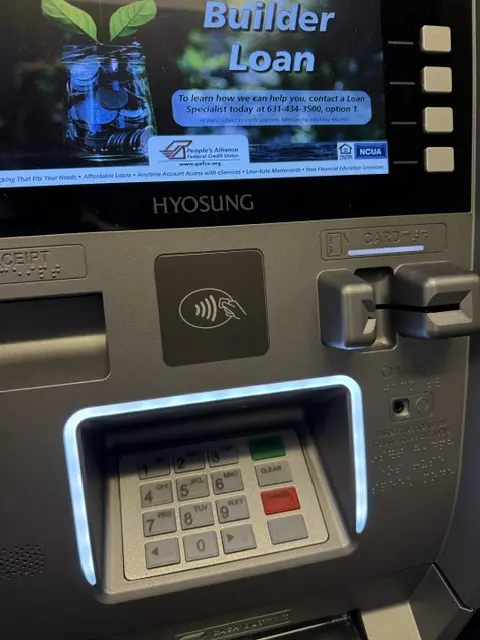
If you’re buying a new ATM today, you may have the option to add an NFC or contactless reader. This allows customers to tap compatible debit cards and, in certain cases, use mobile wallets such as Apple Pay or Google Wallet to initiate an ATM transaction.
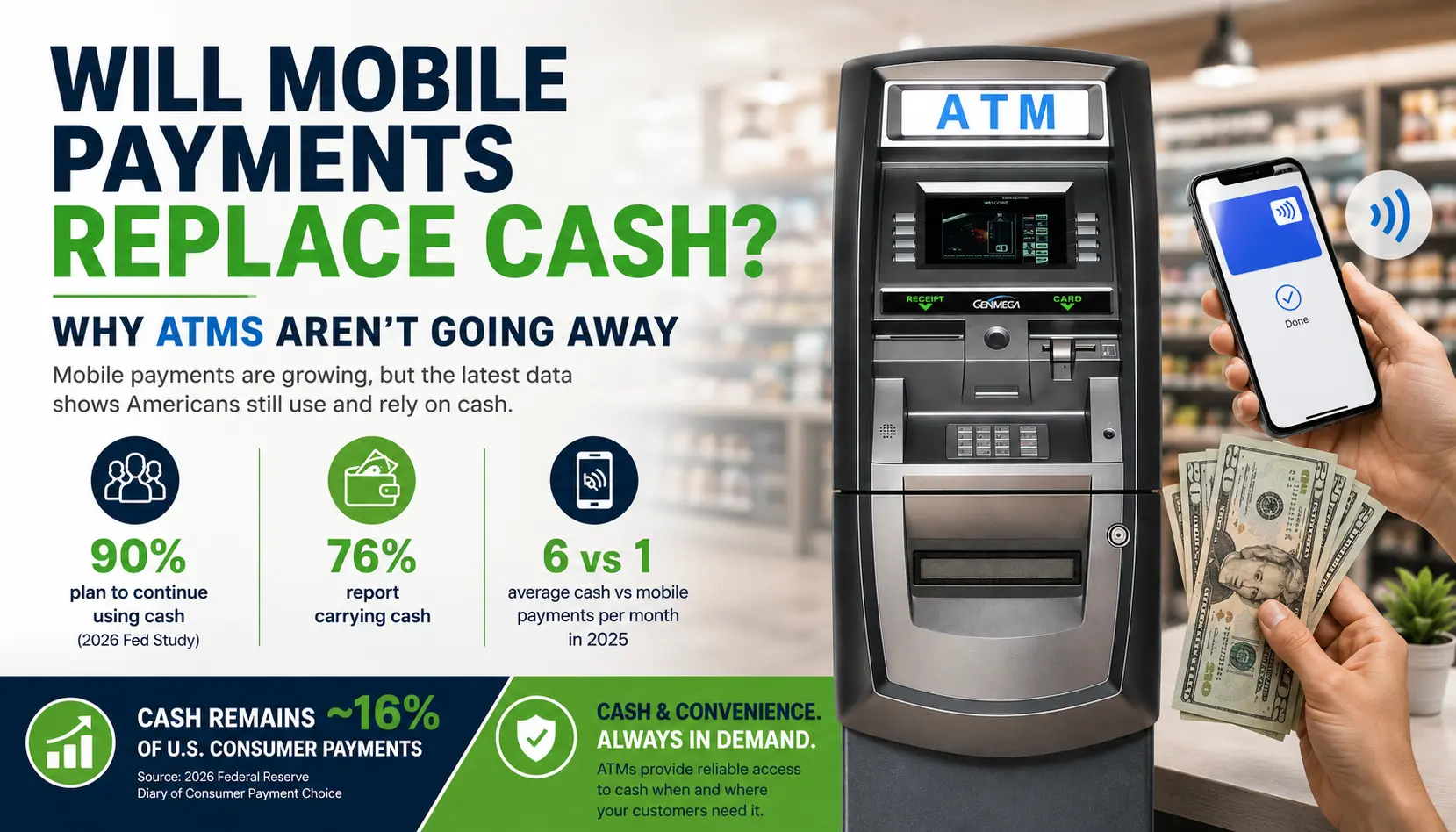
NFC sounds like an obvious upgrade. Contactless payments are growing, consumers are increasingly comfortable tapping instead of inserting a card, and mobile wallets continue to become more popular.
But is NFC actually worth paying extra for on a retail ATM?
Our answer is: It depends on the location.
For high-volume ATMs and locations with younger customers, we think NFC can absolutely make sense. For a low-volume ATM, however, we’d probably save the money.
What Is NFC on an ATM?
NFC stands for Near Field Communication. It’s the technology that allows a customer to hold a compatible debit card, smartphone or other device near a reader instead of physically inserting a card.
On an NFC-equipped ATM, a customer with a contactless debit card may simply tap the card to initiate the transaction.
Certain debit cards stored in mobile wallets such as Apple Pay and Google Wallet may also work. However, there is an important limitation ATM owners should understand:
Having NFC does not mean every mobile wallet or debit card will work at your ATM.
Mobile-wallet ATM withdrawals can depend on the card, issuing bank, ATM processor and network. Some financial institutions allow their mobile-wallet credentials to be used at ATMs while others restrict them.
So, we wouldn’t recommend buying NFC solely because you want to advertise your ATM as an “Apple Pay ATM.”
There are broader reasons to consider it.
Is NFC Worth the Additional Cost?
This is where we think ATM owners should look at the economics of the individual machine.
Suppose an ATM only processes 50 transactions per month.
Even if NFC produces a few additional withdrawals, the added revenue may not be enough to justify spending significantly more for the option. Most customers can still insert their physical debit card and complete a normal transaction.
For a lower-volume location, NFC may simply be a nice feature rather than a necessary investment.
Now consider an ATM completing 500 or 1,000 transactions per month.
The calculation changes considerably.
If NFC helps a 500-transaction ATM capture just 15 additional transactions per month, at a $3 surcharge that’s another $45 per month—or $540 per year.
We’re not suggesting that NFC will automatically increase transactions by a certain percentage. Every location is different.
The point is that small improvements matter much more on a high-volume ATM.
If you’re already doing hundreds of withdrawals every month, giving customers another convenient way to access the ATM becomes much easier to justify.
Younger Customers Can Change the Equation
Transaction volume isn’t the only consideration.
Who uses the ATM matters too.
We would give NFC much stronger consideration at college campuses, college bars, entertainment venues and other locations heavily frequented by younger consumers.
Younger customers tend to be comfortable with contactless technology and mobile wallets. Some may leave home with their phone but without every physical card in their wallet.
Imagine someone at a college bar who needs cash but doesn’t have their physical debit card. A traditional ATM can’t help them.
An NFC-equipped ATM at least gives that customer the possibility of using an eligible debit card stored in their mobile wallet.
That’s a transaction the ATM might otherwise never have the opportunity to capture.
For that reason, we could recommend NFC on a moderate-volume ATM in a college environment even if we wouldn’t recommend it for another ATM doing exactly the same transaction volume.
NFC Isn’t Just About Mobile Wallets
There’s another important reason to consider NFC: contactless debit cards.
When people hear “NFC ATM,” they often immediately think about Apple Pay or Google Wallet. But a customer doesn’t necessarily need a smartphone. Many physical debit cards now include contactless technology and can be tapped rather than inserted. That means the value of NFC isn’t dependent entirely on whether mobile-wallet ATM withdrawals become universally available.
You’re giving customers another way to initiate a transaction today while also preparing the ATM for how consumers may access their money in the future.
What About Future-Proofing Your ATM?
This is probably the strongest argument for adding NFC when the immediate return isn’t obvious.
A good retail ATM can remain in service for many years.
Think about how much payment behavior has changed during the past decade. Consumers have become accustomed to tapping cards, phones and watches at payment terminals. There’s little reason to believe contactless technology will become less important over the life of an ATM purchased today.
Mobile-wallet ATM compatibility is still inconsistent, but the technology continues to evolve.
If you’re purchasing an ATM for a strong location and expect that machine to remain there for years, spending a little more for NFC may make sense simply to future-proof the investment.
On the other hand, we wouldn’t necessarily spend heavily to future-proof an ATM doing 40 or 50 transactions per month.
The economics still have to make sense.
So, Do We Recommend NFC on an ATM?
We like NFC, but we don’t think every retail ATM needs it.
For a high-volume ATM, we’d recommend seriously considering it. Even a relatively small number of additional transactions can help justify the investment.
For college campuses, college bars and locations with younger customers, we’d also lean toward NFC. Customer demographics make contactless cards and mobile wallets particularly relevant.
For a lower-volume retail ATM, we’d probably skip it unless the additional cost is minimal or future-proofing the machine is particularly important.
And we would not buy NFC solely because you expect every customer to be able to walk up with an iPhone and withdraw cash. Mobile-wallet compatibility still varies depending on the customer’s debit card and financial institution.
The better way to look at NFC is simple:
It gives customers another way to use your ATM.
If your transaction volume and customer demographics suggest that additional convenience could generate enough extra transactions, NFC can be a worthwhile investment.
If not, there’s nothing wrong with saving the money and sticking with a traditional card reader.
Buying an ATM? We’ll Help You Choose the Right Options
Whether you’re buying your first ATM, replacing an existing machine or operating an entire ATM portfolio, we can help you determine whether NFC is worth adding based on your transaction volume, customer base and expected use.
|
|
Ready to Get Started?
If you’re thinking about adding an ATM to your store—or you want one from a team that’s been in the industry since 1998—we’re here to help.
We’ll walk you through:
- What to buy
- Where to place it
- How to set it up
- What it should earn
- And how to avoid every mistake new buyers make
Contact Us when you are ready to get started!
Whenever you’re ready, we’re only a call or message away.
Follow Us on Social
Peter Wilkenshoff
Peter Wilkenshoff is the President of Best Products Sales and Service Inc./ BestATMstore.com. With more than 20 years in the payments industry, he has made a career out of helping businesses get paid in the simplest and smartest ways possible. Cash, cards, mobile wallets or whatever futuristic payment gadget someone invents next week, he is here for it. He loves taking the stress out of money movement and turning complex processes into something anyone can understand. When he is not working he is usually fishing, building something around the house, out on a boat, surfing or planning the next family Disneyworld trip which sounds like a strange mix until you meet him and suddenly it all adds up.
Follow Peter on LinkedIn: https://www.linkedin.com/in/peter-wilkenshoff/
Join our Newsletter