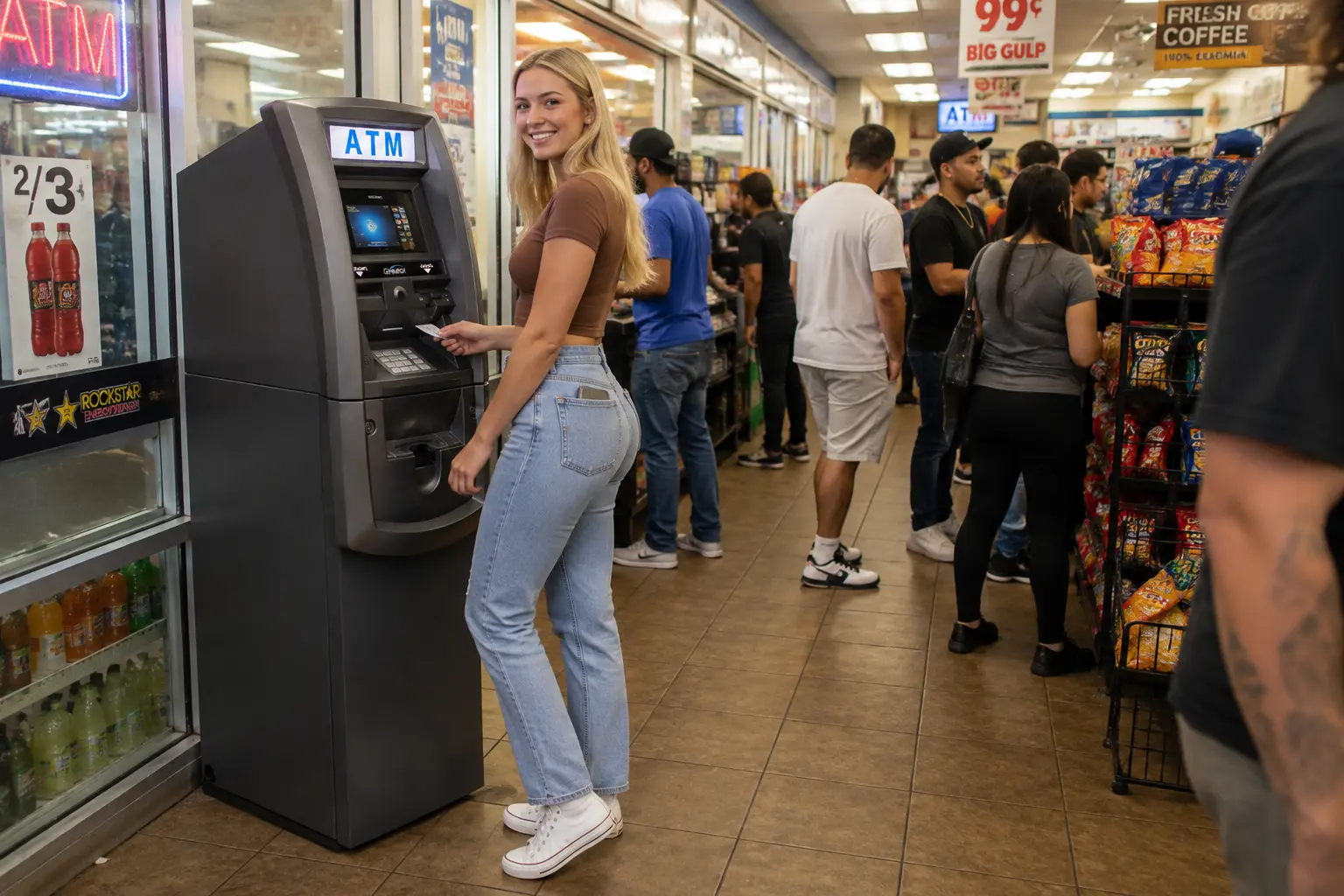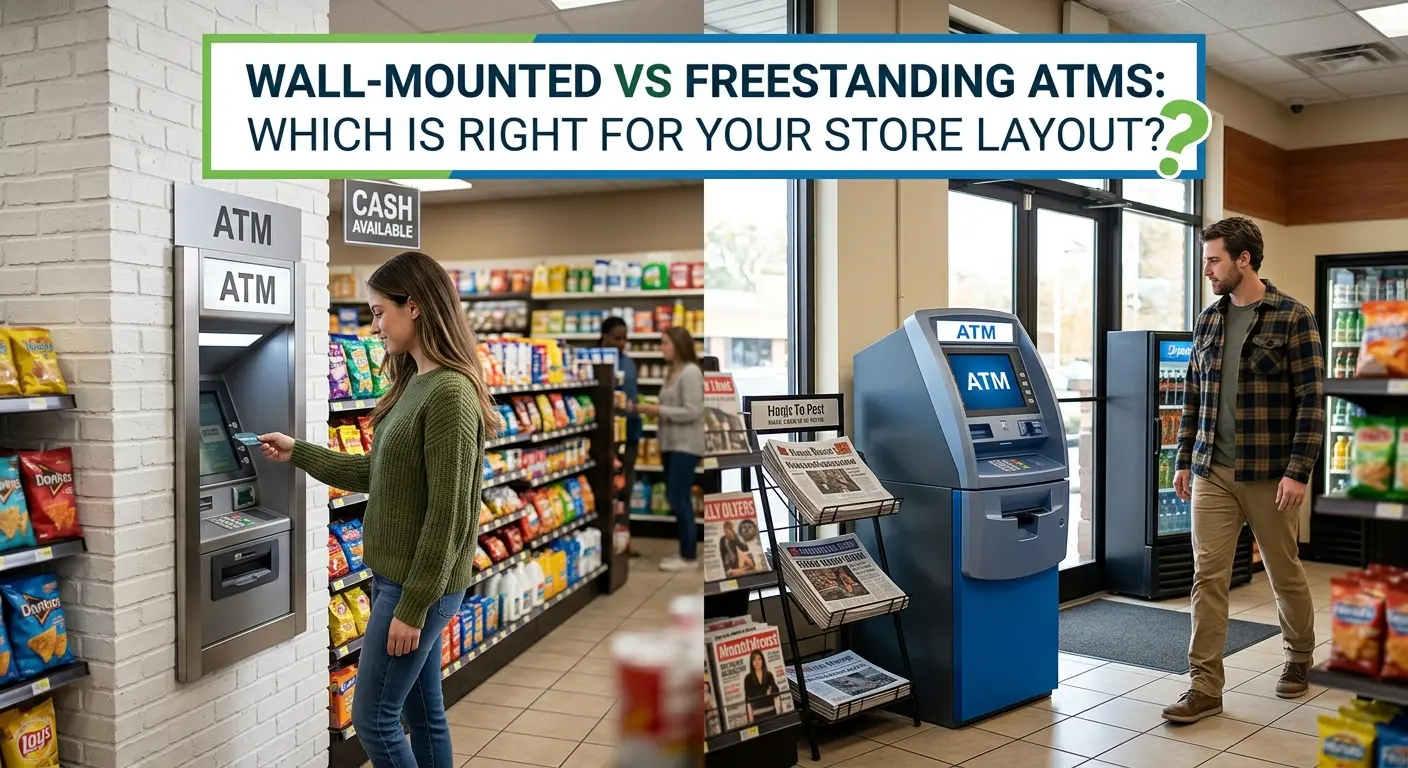
A wall-mounted ATM can preserve valuable floor space, while a freestanding ATM offers greater flexibility when a store has room for a standalone unit. Choosing between them is not simply a matter of appearance; the right configuration depends on how the ATM will fit into customer pathways, available space, accessibility requirements, and the overall layout of the premises. For businesses evaluating wall-mounted vs freestanding ATM options, these practical considerations can influence how easily customers can approach and use the machine. The ADA Standards also address ATM accessibility, including clear floor space, operable parts, reach ranges, privacy, and speech output.
Looking at the strengths, limitations, and best-use scenarios of both configurations provides a clearer starting point for choosing the right ATM for a retail setting.
ATM Layout Decision: Key Considerations
Wall-mounted and freestanding ATMs suit different retail environments, with floor space, installation conditions, accessibility, customer movement, visibility, privacy, and relocation needs influencing the decision. Small stores may benefit from wall-mounted configurations, while freestanding units can offer greater positioning flexibility. Costs extend beyond the machine itself to installation, electrical work, processing, maintenance, and cash management. Evaluating practical requirements alongside long-term usefulness helps retailers select an ATM configuration that fits their operations.
Wall-Mounted vs. Freestanding ATMs: Key Differences
| Factor | Wall-Mounted ATM | Freestanding ATM |
|---|---|---|
| Floor Space | Uses wall space and leaves more floor area available | Requires dedicated floor space |
| Placement Flexibility | Depends on having a suitable wall and installation location | Can generally be positioned in different areas of the store |
| Best for Store Size | Well suited to compact stores with limited floor space | Better suited to stores with more open floor space |
| Customer Traffic | Works well when positioned along a suitable wall without disrupting movement | Can be placed where customer traffic naturally passes, provided it does not obstruct pathways |
| Installation | Installing a wall-mounted ATM requires a suitable wall surface and secure mounting | Requires a stable floor location and appropriate setup |
| Accessibility | Surrounding clearance and accessible approach must be considered at installation | The unit’s position must provide appropriate approach and usable clearance |
| Layout Impact | Can help keep aisles and floor areas more open | Takes up part of the usable floor area |
| Relocation | Moving it may involve additional installation work | Generally offers greater flexibility if the business later changes its layout |
| Key Consideration | Available wall space and installation requirements | Available floor space and desired placement flexibility |
Before settling on a configuration, it’s worth looking at the best ATM brands to buy, since the right layout choice often depends on the model you’re working with.
Space & ADA Compliance Considerations
How much space you have and how compliant it needs to be often comes down to which side of the Wall-Mounted vs Freestanding ATM question fits your store.
Planning the Space Around an ATM
Before choosing an ATM configuration, assess the proposed installation area rather than focusing only on the machine’s dimensions:
- Check nearby fixtures: Shelving, counters, displays, doors, pillars, and queue barriers can restrict usable space. Retailers working with limited wall space often turn to a small wall-mounted ATM to meet these clearance requirements without sacrificing usable floor area.
- Assess the approach: Customers should be able to reach the ATM without navigating around merchandise or equipment.
- Account for busy periods: Make sure the location remains accessible when the store is crowded.
- Allow service access: Staff and technicians need reasonable access for maintenance and servicing.
- Plan before purchasing: Site conditions can determine which ATM configuration is practical, so evaluate the location before selecting the machine.
- Measure the full area: Include the machine, customer standing space, and necessary clearance in line with the official ADA design standards for accessible approach and clearance.
ADA Accessibility for ATM Installation
Accessibility adds another layer to the placement decision. The 2010 ADA Standards address ATM accessibility through requirements covering clear floor or ground space, reach ranges, operable parts, speech output, and privacy. For an accessible approach, Section 707 references the applicable clear floor space requirements, including a 30-by-48-inch minimum space for a forward approach in relevant configurations. Even a small ATM machine must meet these clearance and reach-range requirements to remain compliant. The controls must also be positioned within the applicable accessible reach range.
Therefore, an ATM for retail should be installed where customers can approach, reach, and operate it without unnecessary obstruction. Businesses should review the applicable ADA requirements for their specific installation rather than relying solely on the ATM’s dimensions.
Foot Traffic Placement Tips
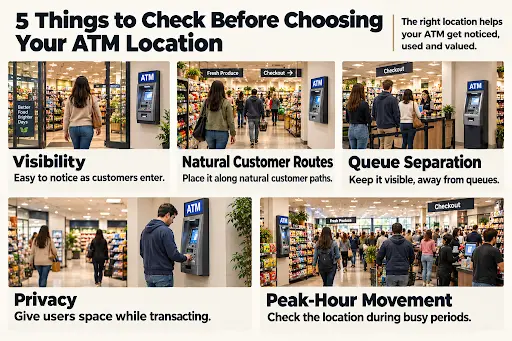
An ATM works best when its location fits naturally into the way a store operates. Small details such as visibility, customer movement, queue patterns, privacy, and busy-period traffic can make a difference to the overall experience. Before finalizing a location, it helps to look at these factors together rather than judging a spot by available space alone. Use the checklist below to assess the practical side of ATM placement.
Cost Difference Between the Two Types
The upfront price is only one part of an ATM investment, and the better option depends on what you are paying for and how well the machine supports your store over time when weighing a Wall-Mounted vs Freestanding ATM decision.
What Can Add to the Investment?
Several factors can affect the overall cost, including the ATM model and features, installation requirements, electrical work, mounting or floor anchoring, site preparation, and any changes needed to accommodate the machine. Ongoing expenses such as processing, cash management, maintenance, and service should also be considered when evaluating the investment.
When Paying More Can Make Sense
A higher initial investment can be worthwhile when the configuration solves an important store-layout problem or provides a better long-term fit worth factoring in before you buy an ATM machine. For example, paying for a wall-mounted configuration may make sense when preserving valuable floor space is important. A freestanding ATM may justify its investment when the ability to position or relocate the machine provides greater flexibility as the store layout changes.
The key is to compare total cost with long-term usefulness. An ATM that fits the store, supports customer access, and remains practical as the business operates can provide better value than simply selecting the lowest-priced option, and for anyone still working through these trade-offs, this beginner’s guide to buying an ATM is a useful next step.
Conclusion
Your store layout should ultimately drive the ATM decision, not the other way around. Best Products Sales & Service can help you weigh the practical differences, choose equipment suited to your space, and handle the installation, processing, and ongoing service. That means you can move forward with an ATM that works naturally within your store, rather than forcing your layout around it.
FAQs About ATMs for Small Retail Stores
How much floor space does a small retail store need for an ATM?
Most stores need at least a few square feet of clear approach space beyond the machine itself, enough for one customer to stand and operate it comfortably.
Can a wall-mounted ATM be installed on any wall?
Not every wall qualifies; it must be structurally sound enough to support the unit’s weight and allow secure anchoring without compromising the wall’s integrity.
Do ATMs need a dedicated power outlet?
Yes, most ATMs require a dedicated electrical circuit to avoid power interruptions, which protects transaction processing and prevents downtime during business hours.
Does an ATM need internet or phone line connectivity?
Yes, ATMs require a connection, typically an internet or phone line, to communicate transaction data securely with the processing network in real time.
Who is responsible for restocking cash in a retail ATM?
This depends on the ownership arrangement; some retailers manage cash loading themselves, while others use a processor or ATM provider for replenishment services.
Follow Us on Social
Peter Wilkenshoff
Peter Wilkenshoff is the President of Best Products Sales and Service Inc./ BestATMstore.com. With more than 20 years in the payments industry, he has made a career out of helping businesses get paid in the simplest and smartest ways possible. Cash, cards, mobile wallets or whatever futuristic payment gadget someone invents next week, he is here for it. He loves taking the stress out of money movement and turning complex processes into something anyone can understand. When he is not working he is usually fishing, building something around the house, out on a boat, surfing or planning the next family Disneyworld trip which sounds like a strange mix until you meet him and suddenly it all adds up.
Follow Peter on LinkedIn: https://www.linkedin.com/in/peter-wilkenshoff/
Join our Newsletter